


Get latest update for our trusted applications
Get latest update for our trusted applications
Cognitive Marketing · Performance Marketing Insights · April 2026
Both platforms work. But running the wrong one wastes budget every single day. Here is how to choose with precision — backed by India-specific data.
Every week, business owners across India ask us the same question: should we be on Google Ads or Meta Ads? The honest answer is that it depends — but not on vague factors like 'your goals'. It depends on whether your customer is actively searching for what you sell, or whether you need to interrupt them and make them want it.
This guide cuts through the noise. You will get industry-specific CPC and CPL benchmarks, a clear framework for choosing your primary platform, and a battle-tested strategy for using both together to build a full revenue funnel.
The single most important distinction between the two platforms is the mental state of your audience when your ad appears.
When someone types "best CA firm in Lucknow" or "buy running shoes online India", they have already decided they want something. They are in buying mode. Google Ads puts your business in front of that hand-raised prospect at the exact moment of highest purchase intent.
This is why Google Search Ads convert at 3x to 5x higher rates than display or social ads for most categories. You are not convincing anyone — you are simply being the first door they open.
Meta (Facebook + Instagram) flips this dynamic entirely. Your audience is scrolling Reels, checking Stories, or catching up on friends' posts. They were not looking for you. A Meta ad has to stop the scroll, create curiosity, and convert cold interest into desire — often over multiple touchpoints.
This is not a weakness. For the right business, it is a superpower: you can reach 500 million+ Indian users, target by hyper-specific interests and behaviours, and build remarketing pipelines that warm audiences before they ever search for you on Google.
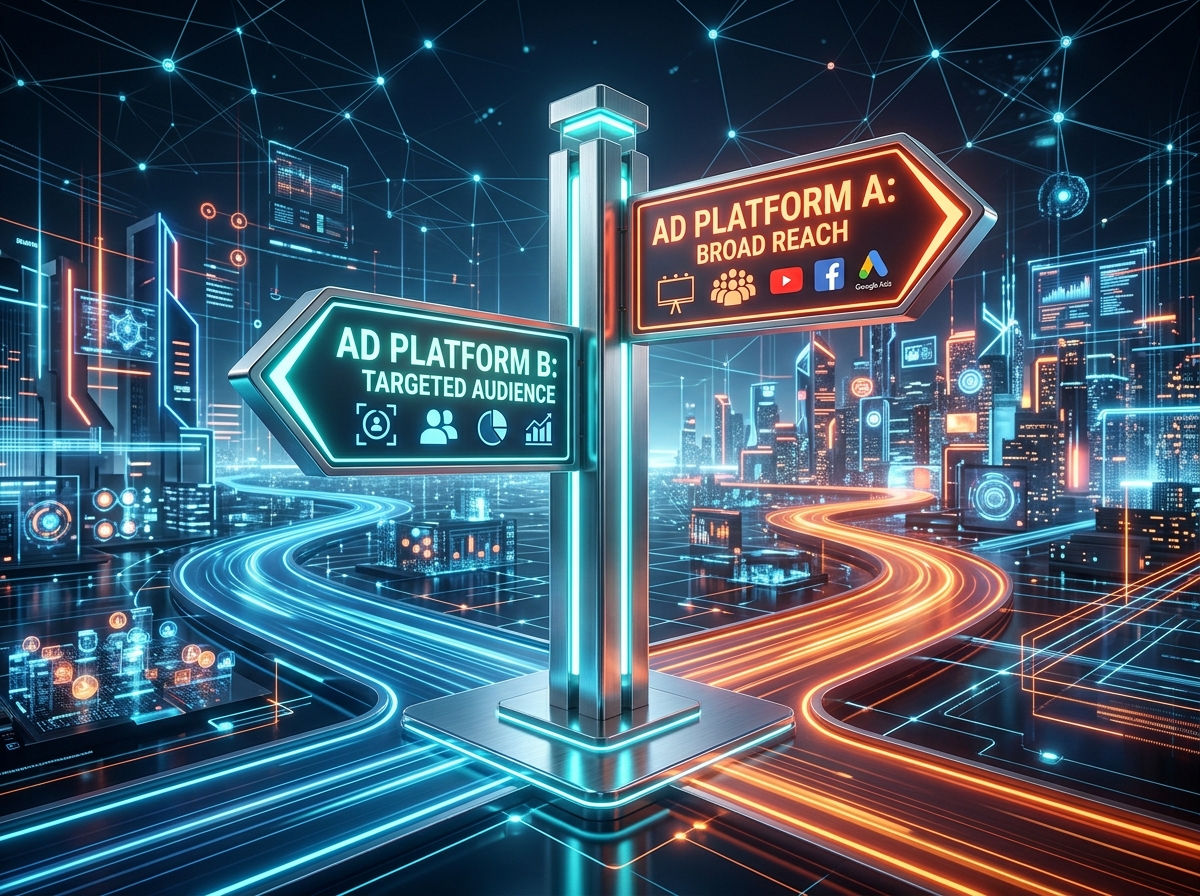
Google Ads wins at the bottom of the funnel. Meta Ads wins at the top. The most effective brands in India use both — letting Meta build the audience and Google close the sale.

Use this table to identify where each platform gives you the structural advantage:
| Platform | Google Ads | Meta Ads (Facebook + Instagram) |
|---|---|---|
| Intent | Active — users are searching now | Passive — users are browsing |
| Ad Format | Search text, Shopping, Display, YouTube | Image, Video, Carousel, Reels, Stories |
| Average CPC (India) | ₹15–₹120 (varies by industry) | ₹3–₹30 (CPM-based buying) |
| Average CPL (India) | ₹300–₹2,500 | ₹80–₹800 |
| Best Funnel Stage | Bottom of funnel (conversion) | Top & mid funnel (awareness, nurture) |
| Audience Targeting | Keyword, location, device, audience lists | Demographics, interests, behaviour, lookalikes |
| Minimum Budget | ₹500/day workable; ₹1,500+/day recommended | ₹300/day workable; ₹800+/day recommended |
| Learning Period | 1–2 weeks | 1–2 weeks (Meta's learning phase: 50 conversions) |
| Remarketing | Google Display + YouTube remarketing | Custom audiences + Meta Pixel retargeting |
| Best Business Type | B2B, local services, high-intent products | D2C, fashion, food, lifestyle, impulse buys |
| Analytics | Google Ads + GA4 | Meta Ads Manager + Pixel + Conversions API |
Table 1: Google Ads vs Meta Ads — Head-to-Head Comparison (India, 2026)

Google Ads is the stronger default for:
If you are a chartered accountant, law firm, HR consulting agency, or industrial supplier — your potential client is not browsing Instagram waiting to discover you. They have a specific problem, they search for a solution, and they call the first credible result they find.
At Cognitive Marketing, we consistently see B2B clients generate 3x to 6x ROAS on Google Search before Meta even begins to ramp. Budget allocation: put 60–70% on Google, use Meta only for remarketing.
Dentists, physiotherapists, plumbers, HVAC contractors, pest control companies — these categories live and die by Google search. Someone with a blocked drain at 11pm will not scroll Instagram; they will type 'plumber near me' and call the first number they see.
Google's Local Services Ads (LSAs) and call-only campaigns are built precisely for this model and deliver some of the lowest CPLs of any format in India.
If your product has consistent monthly search volume — inverter batteries, water purifiers, UPSC coaching, chartered accountant courses — Google Ads lets you capture that existing demand efficiently without the creative production overhead Meta requires.
Your customers search for what you sell, your ticket size is above ₹5,000, or your business category has high purchase intent (services, B2B, local).
Ethnic wear, handcrafted jewellery, home decor, organic skincare — these categories thrive on Instagram and Facebook because the product sells itself visually. A 15-second Reel of your product can reach 50,000 targeted users for the same budget that gets you 500 clicks on Google.
India's D2C brands that scaled from ₹0 to ₹10 crore+ almost universally credit Meta's creative ad formats as their primary growth engine.
Here is a strategy most small businesses miss: use Meta to warm up cold audiences — build awareness, get engagement, collect website visitors via the Meta Pixel — so that when those people eventually search on Google, they already know your brand and click your ad over a competitor's.
This cross-platform audience priming can reduce your Google Ads CPL by 20–40% over 3–6 months.
India has over 700 million social media users, and the majority of growth is happening in smaller cities like Varanasi, Jaipur, Indore, Coimbatore, and Surat. These audiences are highly active on Facebook and Instagram — often more than they are on Google Search — making Meta the primary reach mechanism in these geographies.
Click-to-WhatsApp campaigns on Meta have become particularly effective in Tier 2/3 markets, with CPLs often 60–70% lower than equivalent Google campaigns.
Your product is visual, your customer does not yet know they need you, your budget is under ₹20,000/month, or you are targeting Tier 2/3 cities primarily through mobile.
The numbers below are based on aggregated campaign data across 23+ industries. Treat these as directional benchmarks, not guarantees — actual costs depend heavily on quality score, audience targeting, landing page conversion rate, and competitive density.
| Industry | Avg CPC (₹) | Avg CPL (₹) | Notes |
|---|---|---|---|
| Legal Services | ₹80–₹160 | ₹800–₹2,500 | High competition; strong ROI |
| Healthcare / Clinics | ₹40–₹100 | ₹400–₹1,200 | Regulated; ad copy restrictions apply |
| Real Estate | ₹60–₹140 | ₹600–₹2,000 | High-value conversions justify CPL |
| Education / EdTech | ₹25–₹80 | ₹300–₹900 | Peak demand in May–June |
| Finance / Insurance | ₹70–₹180 | ₹700–₹2,200 | Highest CPCs in India |
| E-commerce / Retail | ₹15–₹50 | ₹200–₹600 | Shopping ads often cheaper per sale |
| Restaurants / Local Food | ₹8–₹25 | ₹80–₹250 | High volume, fast decisions |
| B2B Software / SaaS | ₹50–₹120 | ₹600–₹2,000 | Long sales cycles; nurture needed |
| Travel & Hospitality | ₹20–₹60 | ₹200–₹700 | Seasonal spikes in Oct–Mar |
| Beauty & Wellness | ₹12–₹40 | ₹100–₹400 | Strong on Meta; Google for branded |
Table 2: Google Ads India CPC & CPL Benchmarks by Industry (2026). Source: Cognitive Marketing campaign data across 23+ industries.
| Industry | Avg CPM (₹) | Avg CPL (₹) | Best Format |
|---|---|---|---|
| D2C Fashion & Lifestyle | ₹60–₹150 | ₹80–₹250 | Reels + Carousel |
| Food & Beverages | ₹40–₹100 | ₹60–₹180 | Video + Stories |
| Home Decor / Furniture | ₹70–₹160 | ₹120–₹350 | Carousel + Collection |
| EdTech / Coaching | ₹80–₹200 | ₹150–₹500 | Lead Gen Forms |
| Real Estate | ₹100–₹250 | ₹300–₹900 | Video + Lead Ads |
| Health & Fitness | ₹50–₹130 | ₹100–₹300 | Reels + Lead Forms |
| B2B Services | ₹100–₹280 | ₹400–₹1,200 | LinkedIn-style targeting on Meta |
| Local Services | ₹40–₹120 | ₹80–₹300 | Lead Gen + Click-to-WhatsApp |
Table 3: Meta Ads India CPM & CPL Benchmarks by Industry (2026). Source: Cognitive Marketing campaign data.
A critical note on CPL comparisons: Meta's lower CPL often reflects smaller-ticket or less-qualified leads. A ₹150 CPL on Meta for a real estate project does not compare to a ₹900 CPL on Google if the Google lead closes at 12% versus the Meta lead at 2%. Always evaluate CPL in context of lead quality and downstream conversion rate.
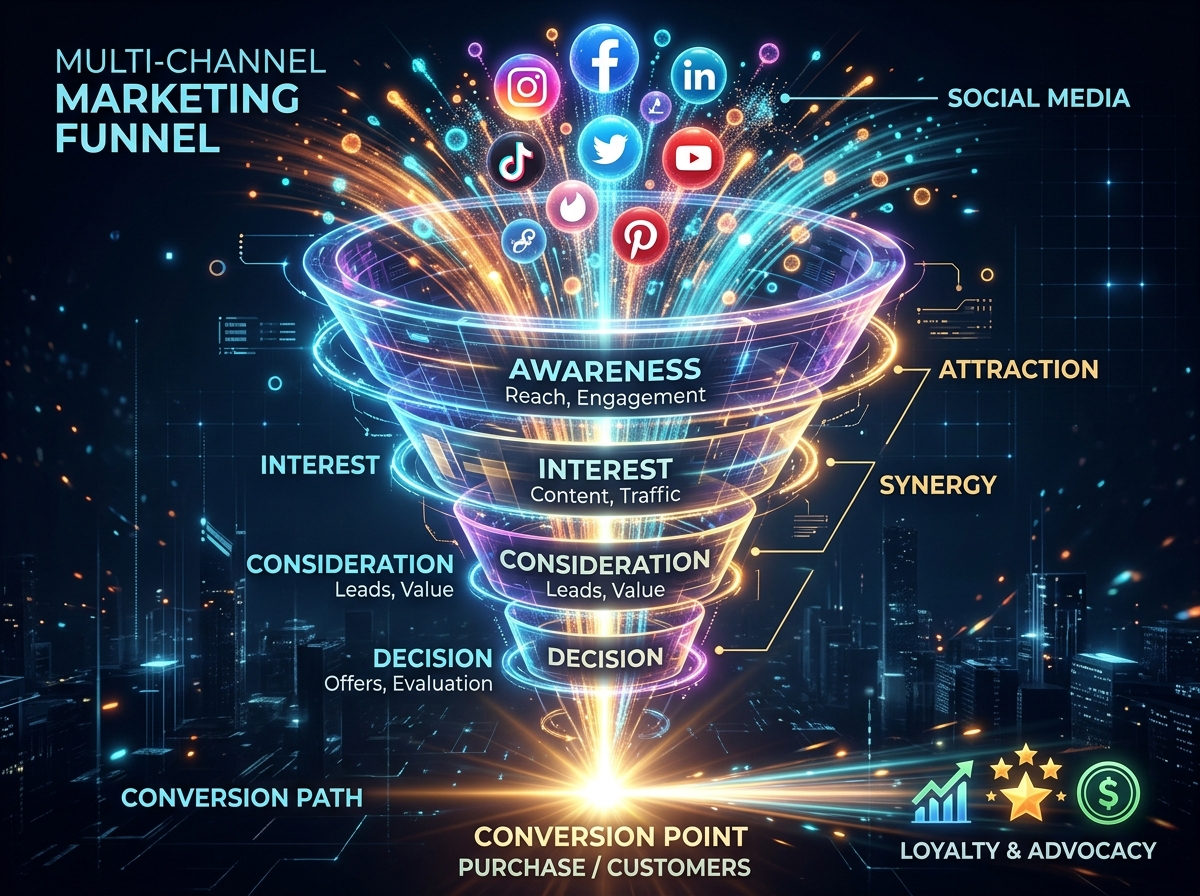
The brands winning in India in 2026 are not choosing between Google and Meta. They are building full-funnel pipelines where both platforms reinforce each other.
Here is how the most effective multi-platform strategy works in practice:
The most underused tactic in Indian digital advertising is cross-platform remarketing. Upload your customer list to both Google and Meta. Run different creative to the same warm audience on both platforms simultaneously. The combined frequency accelerates the purchase decision without over-relying on any single channel.
Clients who implement cross-platform remarketing typically see a 35–50% reduction in cost-per-sale versus single-platform strategies, based on Cognitive Marketing campaign data.
The right budget split is not universal — it depends on your category, intent level, and where your customers are in the buying journey. Here is a framework we use across client engagements:
| Business Type | Google Ads % | Meta Ads % | Logic |
|---|---|---|---|
| B2B / Professional Svc | 65% | 35% | Capture active demand; Meta for nurture |
| D2C / E-commerce | 40% | 60% | Meta drives discovery; Google catches searchers |
| Local Services | 70% | 30% | Search intent dominates; Meta for brand recall |
| EdTech / Coaching | 50% | 50% | Balanced: Google for courses, Meta for leads |
| Real Estate | 55% | 45% | Search for ready buyers; Meta for awareness |
Table 4: Recommended Google vs Meta Budget Split by Business Type. Adjust based on actual campaign performance data.
Example: A Varanasi-based textile exporter targeting corporate buyers spent ₹60,000/month on ads. We allocated 65% (₹39,000) to Google Ads targeting high-intent B2B keywords, and 35% (₹21,000) to Meta for brand building and remarketing. Within 90 days, qualified inbound enquiries increased by 284%, with Google delivering the majority of closed deals and Meta reducing the sales cycle by 3 weeks on average.
Meta Ads typically delivers a lower raw CPL (₹80–₹500 across most categories) compared to Google Ads (₹300–₹2,500). However, Google Ads usually delivers higher-intent, higher-quality leads. The right metric is cost-per-qualified-lead, not cost-per-lead.
Yes, if your product is visual, your budget is under ₹15,000/month, and your audience does not actively search for your category. D2C fashion, food brands, and lifestyle products regularly build sustainable businesses on Meta alone. But adding even a small Google Search budget captures demand Meta creates — making both more efficient over time.
You can technically start with ₹500/day, but ₹1,500–₹2,000/day is the practical minimum for generating enough data to optimise within 2–3 weeks. For Meta, ₹500–₹800/day is workable for a single ad set with meaningful learning.
For B2B and high-ticket services: Google Ads leads are typically more qualified. For B2C, local businesses, and Tier 2/3 markets: Meta's Lead Gen Ads and Click-to-WhatsApp campaigns often deliver superior volume at lower cost. Many businesses use Meta for lead volume and Google for lead quality — and combine both in a blended pipeline.
Google Search Ads: measurable results within 2–3 weeks. Meta Ads: allow 4–6 weeks minimum for the learning phase to exit and audiences to warm up. Both platforms reward patience and consistent optimisation over 90+ days more than any short-term burst campaign.
Less efficient than Google or LinkedIn for high-ticket B2B, but not irrelevant. Meta works well for B2B brand awareness, content distribution, and remarketing to people who visited your site or engaged with your content. Use it as a supporting channel rather than the primary B2B acquisition channel.
Still unsure? Answer these 3 questions to get a clear platform recommendation for your specific business. Our team will review your answers and share a personalised allocation framework — no obligation, no pitch.
Answer 3 questions and get our platform recommendation instantly.
Q1. Do your customers search for your product/service on Google? → Yes / No / Sometimes
Q2. Is your product visual in nature (fashion, food, home decor, lifestyle)? → Yes / No
Q3. What is your average monthly ad budget? → Under ₹15K / ₹15K–₹50K / ₹50K+
→ Book a Free Strategy Call to Get Your Personalised Answer ←
Cognitive Marketing is a B2B performance marketing agency based in Varanasi, India, specialising in Google Ads management, Meta Ads, SEO, and full-funnel digital strategy for small and mid-size businesses. We have generated ₹47Cr+ in client revenue, delivered 18,500+ qualified leads across 23+ industries, and improved average ROAS by 284% for businesses that were previously running underperforming ad accounts.
→ Explore our Google Ads Management services: cognitivemarketing.in/google-ads-management/
→ Explore our Performance Marketing services: cognitivemarketing.in/performance-marketing/
