


Get latest update for our trusted applications
Get latest update for our trusted applications
Last updated: April 12, 2026 | Cognitive Marketing
Every Indian business owner with a digital budget has heard the pitch: "run ads, get leads, grow your business." Most have also lived the disappointment — ₹50,000 in ad spend, a flurry of click metrics, and zero revenue to show for it.
The problem is rarely the platform. Google Ads works. Meta Ads works. The problem is the model — agencies optimising for activity instead of outcomes, and business owners who don't know what to demand.
This guide changes that. Whether you're evaluating your first performance marketing agency in India or auditing a current one, here's everything you need to make a decision grounded in data, not sales decks.
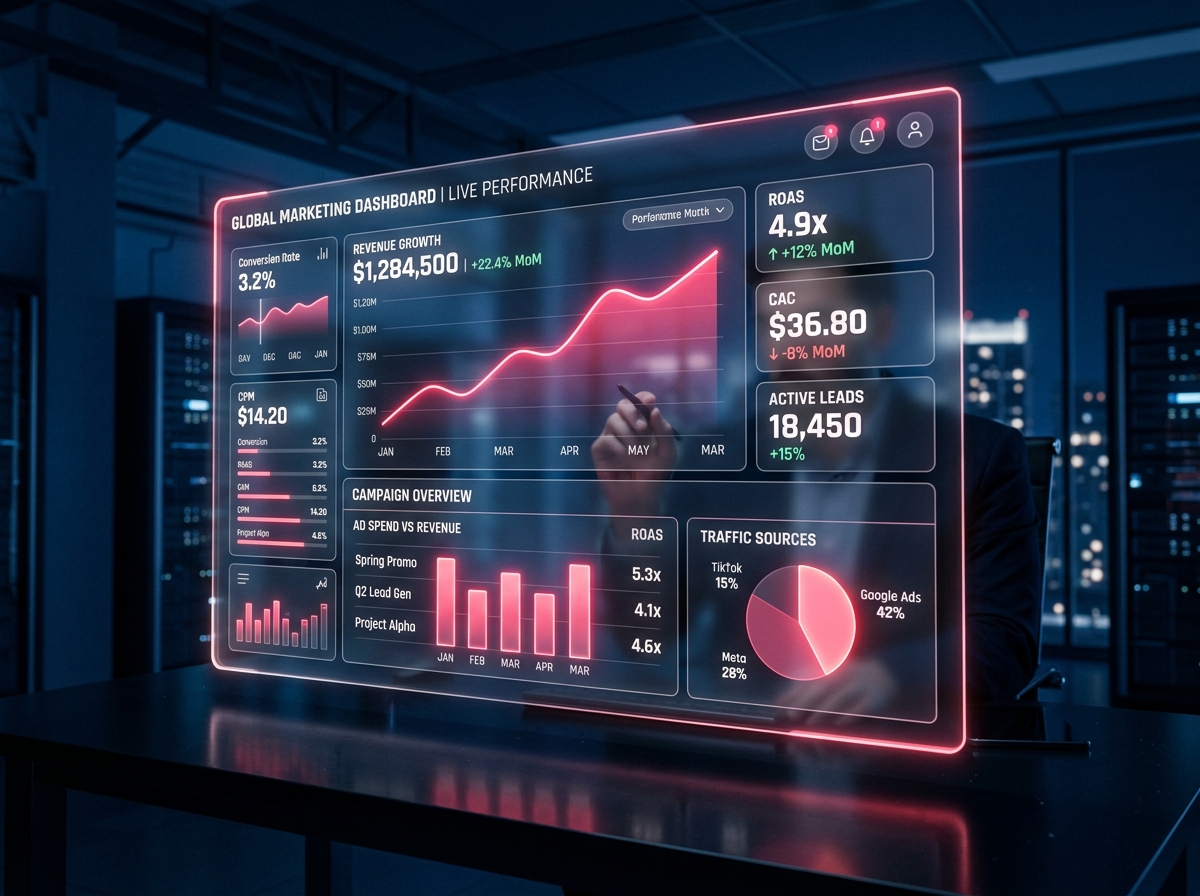
Performance marketing is governed by outcomes, not vanity metrics.
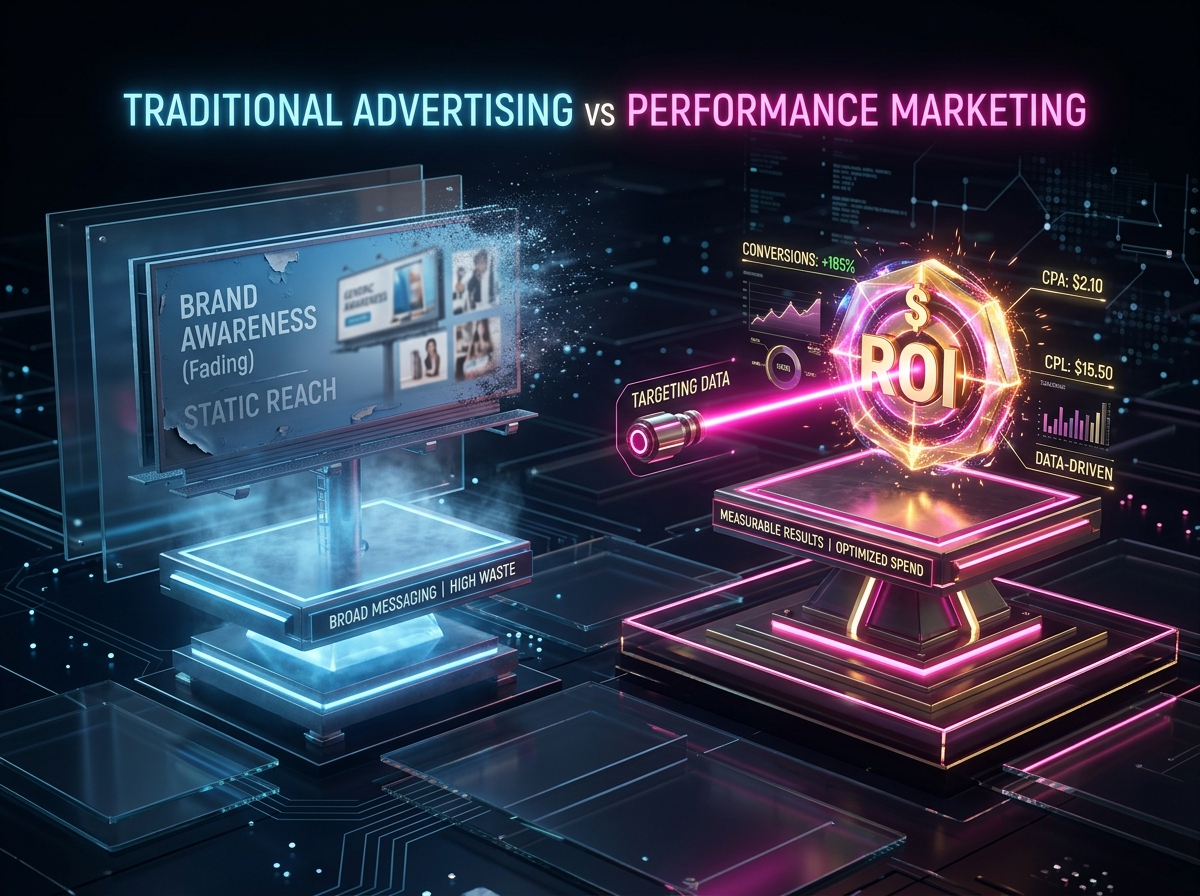
Traditional methods focus on reach; performance marketing focuses strictly on ROI.
Performance marketing is a results-based model where the brand pays — and the agency is measured — based on measurable business outcomes: qualified leads, revenue generated, cost per acquisition, or return on ad spend. Every rupee spent is traceable to a result.
It is not a synonym for digital marketing. It is a specific accountability framework applied to paid channels (Google Ads, Meta, LinkedIn, programmatic) backed by attribution modelling, conversion tracking, and continuous optimisation.
Traditional advertising buys attention — a billboard impression, a TV spot, a newspaper placement. You pay for reach, and you hope some of it converts. Measurement is approximate at best.
Performance marketing buys outcomes. If the Google Ads campaign doesn't produce a lead below your target CPL, something changes — the audience, the bid strategy, the landing page, the offer. Nothing is set and forgotten.
| Dimension | Traditional Advertising | Performance Marketing |
|---|---|---|
| Measurement | Reach, frequency, recall | ROAS, CPL, CAC, LTV |
| Billing trigger | Campaign goes live | Conversion or action occurs |
| Optimisation cycle | Monthly or quarterly | Daily / weekly |
| Attribution | Survey-based or assumed | Data-driven, multi-touch |
| Risk | Brand bears all risk | Shared accountability |
Three metrics govern whether a performance marketing engagement is succeeding or failing:
Across 23+ industries, our campaigns average a 284% ROAS improvement within the first 90 days — measured exclusively against revenue and qualified leads, never vanity metrics.
India's digital ad spend crossed ₹35,000 crore in 2025. A significant portion of that — particularly among SMEs — produces no measurable return. The reasons are structural, not accidental.
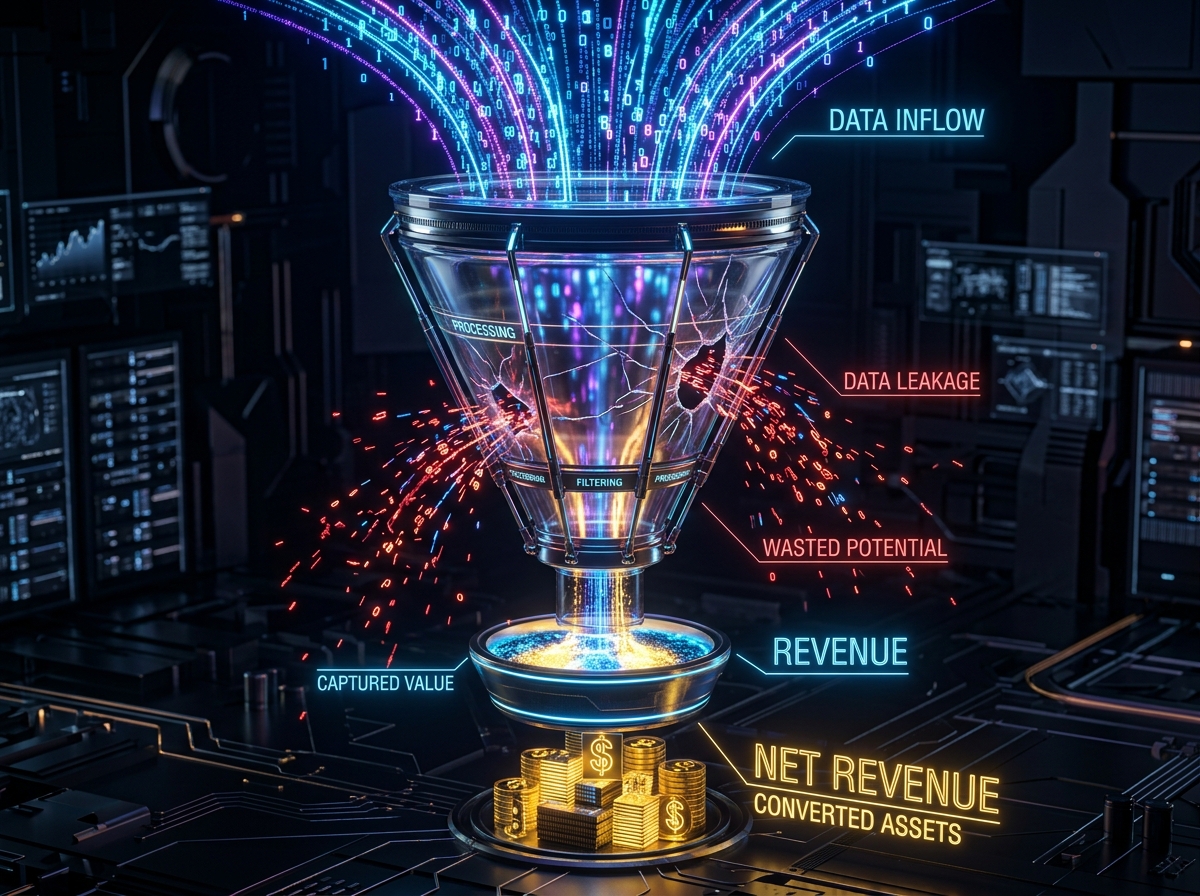
Without the right conversion infrastructure, your ad budget leaks out before reaching the bottom line.
Impressions. Clicks. Reach. Engagement rate. These numbers fill dashboards and look like progress. They are not business outcomes.
A campaign that generated 120,000 impressions but zero qualified leads has a 0% business impact — regardless of how the PDF report is formatted. Any performance marketing agency in India that leads with these metrics in its reporting is, by definition, not doing performance marketing.
The only metrics that matter are:
The agency's job begins long before an ad goes live and extends well beyond hitting "Publish" on a campaign. Here is what rigorous performance marketing looks like end-to-end.
Most businesses think in terms of "running ads." High-performing agencies think in terms of funnel architecture — mapping every stage of the buyer's journey and owning the conversion infrastructure at each stage.
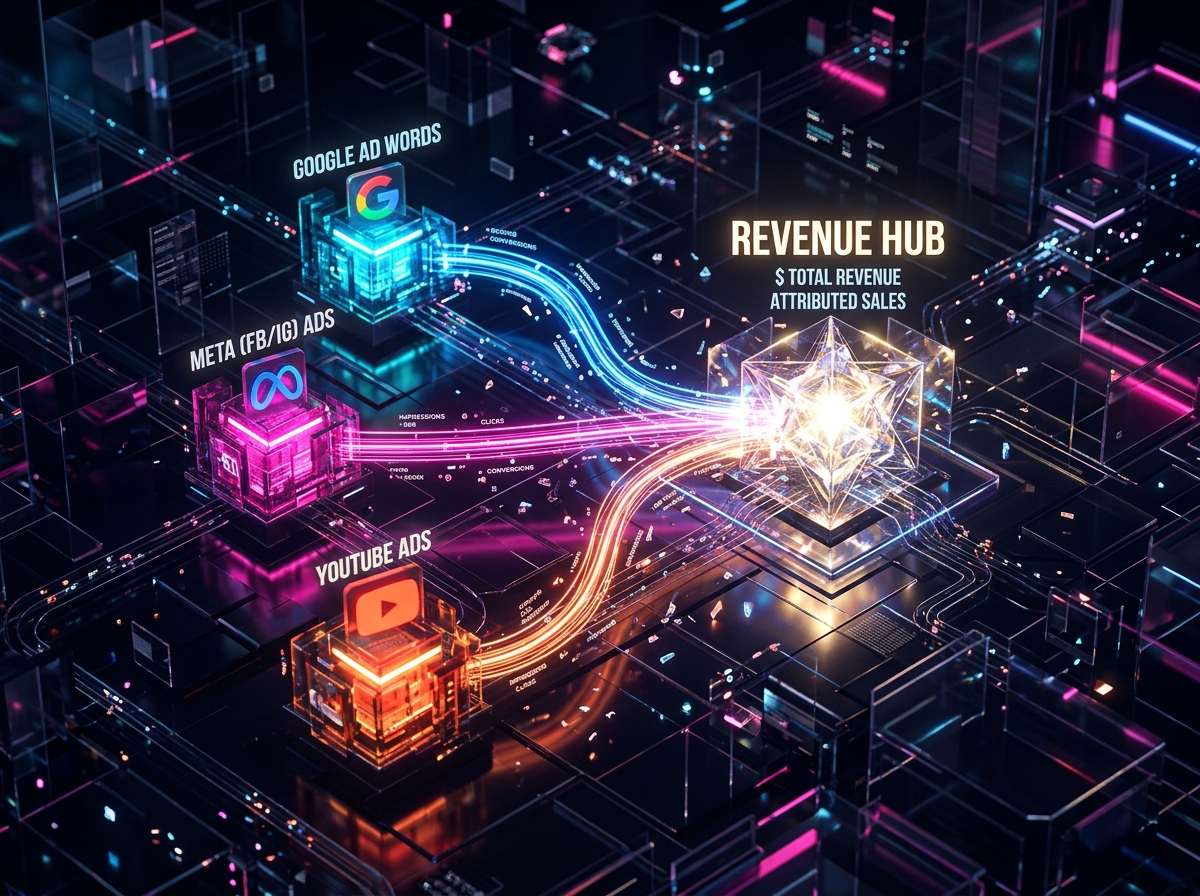
Multi-channel orchestration feeds attribution data into a single model to uncover what truly works.
The question "should we run Google or Meta?" is the wrong question. The correct question is: where is your buyer at each stage of their journey, and what do they need to see?
Multi-channel orchestration means these aren't running in silos — every channel feeds attribution data into a single model, and budgets shift weekly based on which channel is producing the best CAC at each funnel stage.
Attribution is the difference between knowing your ROAS and guessing at it. The technical stack required for rigorous performance marketing includes:
Without this infrastructure, every ROAS number is an estimate. With it, you can trace a ₹47 crore revenue result back to the exact campaign, ad set, keyword, and audience that generated it — which is exactly how we operate.

The Indian digital marketing agency market has over 10,000 registered firms. A meaningful subset will take your budget and produce activity reports instead of revenue. Here is how to distinguish the ones that deliver.
| 🚩 Red Flag | ✅ Green Flag |
|---|---|
| Promises guaranteed ROAS from Day 1 | Sets realistic 60–90 day projection with milestones |
| Reports impressions, clicks, CTR — not revenue | Primary KPI is ROAS, CAC, and qualified leads |
| No attribution model discussed | Explains last-click vs data-driven attribution upfront |
| Lock-in contract >12 months with no exit clause | Monthly or quarterly commitment with transparent billing |
| One-size-fits-all campaign structure | Custom funnel architecture per industry and audience |
| No landing page or CRO involvement | Tests landing pages, copy, and offers as part of scope |
A professional performance marketing report is a business document, not a dashboard export. It should contain:
Anything less is a vanity document. Insist on this format from Day 1.

To ground the theory in reality, here is aggregated performance data from three Cognitive Marketing client engagements. Client names have been anonymised; the numbers are exact.
| Client Type | Industry | Before | After | CAC Change |
|---|---|---|---|---|
| D2C Fashion Brand | E-commerce | 1.4x ROAS | 4.2x ROAS | ↓ 62% |
| B2B SaaS Platform | Software | ₹2,200 CPL | ₹680 CPL | ↓ 69% |
| Real Estate Developer | Real Estate | 11 qualified leads/mo | 74 qualified leads/mo | ↓ 44% |
In all three cases, the single largest improvement factor was not the platform or the budget — it was attribution setup and funnel architecture that existed before the first rupee of new spend was committed.

India's D2C market is projected to cross ₹4.5 lakh crore by 2027. The brands that win are not the ones spending the most — they're the ones with the lowest CAC and highest repeat purchase rate.
B2B performance marketing in India requires patience and precision. The sales cycle is longer, the decision committee is wider, and the LTV is significantly higher — which changes the acceptable CAC entirely.
Real estate is India's highest-ticket digital ad category and also one of the most wasteful. Most developers buy traffic. Sophisticated ones buy intent.
India's education advertising market is intensely competitive, particularly for coaching institutes and ed-tech platforms competing for the same Class 10–12 parents. The brands that break through have three things in common: hyper-specific messaging, fast follow-up, and tight lead qualification.

B2B SaaS platform serving SME retailers in India. Monthly recurring revenue (MRR) model. Previous agency had run Google Ads for 8 months with a ₹1,80,000/month ad spend and a CPL of ₹2,200 — primarily form submissions from unqualified traffic.
The platform had the right product and a reasonable ad budget. The issue was that 78% of leads coming through were from micro-businesses that couldn't afford the platform's entry tier — meaning the sales team was burning hours qualifying and rejecting low-fit leads, and the real buyers were never being reached.
The ad budget did not increase. The architecture, attribution, and audience targeting changed — and the economics followed.
Work backwards from your revenue goal to the required investment — not the other way around.
Performance marketing pricing in India follows three primary models. Understanding each prevents the most common mistake: choosing an agency based on the lowest management fee while ignoring how that fee structure affects the agency's incentives.
| Engagement Model | Ad Spend Range | Agency Fee | Best For |
|---|---|---|---|
| Starter | ₹30K–₹1L/mo | ₹15,000–₹25,000/mo | SMEs testing paid ads |
| Growth | ₹1L–₹5L/mo | ₹30,000–₹60,000/mo | Scaling D2C / B2B |
| Enterprise | ₹5L+/mo | ₹80,000+ or % of spend | National / multi-channel |
| Performance Share | Varies | 10–20% of revenue generated | High-trust partnerships |
A few important caveats:
The right budget conversation starts not with "what can we afford?" but with "what is our target CPL and CAC, and what ad spend is required to achieve our growth targets?" A credible agency will work backwards from your revenue goal to the required investment — not the other way around.

Digital marketing is a broad category encompassing all online marketing activities — SEO, content, social media, email, paid ads, and more. Performance marketing is a specific subset focused exclusively on paid channels with direct outcome accountability. All performance marketing is digital marketing. Not all digital marketing is performance marketing.
Management fees typically range from ₹15,000–₹25,000/month for SMEs spending under ₹1 lakh on ads, to ₹60,000–₹1,50,000/month for brands spending ₹3–10 lakh. Enterprise brands often move to percentage-of-spend or revenue-share models. These fees are in addition to the actual ad spend that flows to Google and Meta.
For properly structured Google Search campaigns, initial data (enough to start optimising) appears within 2–3 weeks. Meaningful ROAS improvement typically occurs in 45–60 days as conversion data accumulates and the algorithm optimises. Full-funnel campaigns with Meta and retargeting layers usually hit their stride in 60–90 days. Any agency promising significant ROAS results in Week 1 is either misrepresenting their process or setting expectations they cannot meet.
Yes — with a different benchmark framework. B2B performance marketing focuses on CPL (cost per qualified lead), pipeline value generated, and eventually closed-won revenue attributed to paid campaigns. The metrics are more complex because the sales cycle is longer, but the accountability model is identical. LinkedIn Lead Gen, Google Search for high-intent terms, and ABM-style audience targeting are the primary channels.
₹30,000/month is a rough floor for a single-channel Google Ads campaign to generate enough conversion data to optimise meaningfully. For multi-channel full-funnel campaigns, ₹75,000–₹1,00,000/month allows for proper testing across Google and Meta. Below these thresholds, the algorithm doesn't receive enough conversion signals to exit the learning phase, and results will be volatile and difficult to improve.
Stop guessing. Start measuring.
We'll audit your current campaigns, attribution setup, and conversion infrastructure — and tell you exactly where your budget is leaking and what it would take to fix it.
✦ ₹47Cr+ in client revenue generated ✦ 284% avg ROAS improvement ✦ 18,500+ qualified leads delivered
Book your free audit →Explore related services:
Performance Marketing Services | Google Ads Management | SEO Services India
Prashant leads performance marketing strategy at Cognitive Marketing, a B2B growth agency based in Varanasi, India. He has architected paid campaigns across 23+ industries — from D2C fashion brands and SaaS platforms to real estate developers and ed-tech companies — generating over ₹47 crore in directly attributed client revenue. His frameworks combine rigorous attribution modelling with full-funnel campaign architecture built for the Indian market.
Connect on LinkedIn: linkedin.com/in/prashant-chaubey | Agency: cognitivemarketing.in
