


Get latest update for our trusted applications
Get latest update for our trusted applications
Last updated: April 2026 | Cognitive Marketing | cognitivemarketing.in
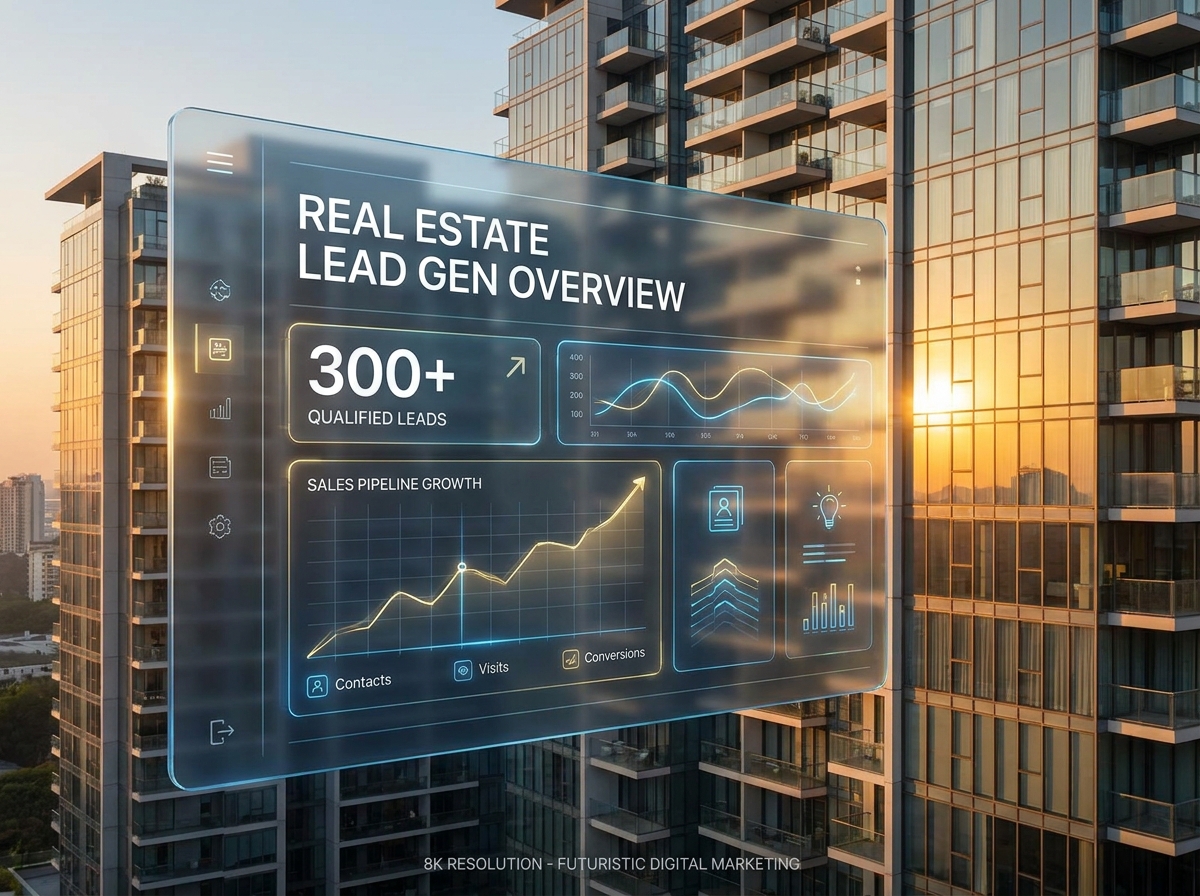
Implementing a structured digital marketing stack is the key to scaling real estate leads efficiently.
In 2025, Indian consumers browsed an average of 4.7 property portals before making a single enquiry. They spent weeks — sometimes months — on YouTube walkthroughs, Google searches, and WhatsApp group discussions before a sales team ever spoke to them. And yet, most real estate developers in India still pour the majority of their marketing budget into 99Acres listings and MagicBricks promotions — portals where they compete for the same buyer against every other developer in the city, at ever-increasing costs.
The developers generating 300+ qualified leads per month aren't spending more. They've built an owned marketing stack — one that captures buyer intent at every stage of the consideration journey and converts that intent through the channels Indian buyers actually trust.
This guide covers exactly how to build that stack: which channels to run, in what sequence, at what budget, and how to benchmark your cost per lead against the best-in-class for your city.
Real estate is not like selling software or fashion. The consideration period runs from 3 months to 3 years. The final decision almost always happens offline — a site visit, a conversation with family, a second walkthrough. And the buyer's emotional and financial stakes are the highest of any purchase they will make in their lifetime.
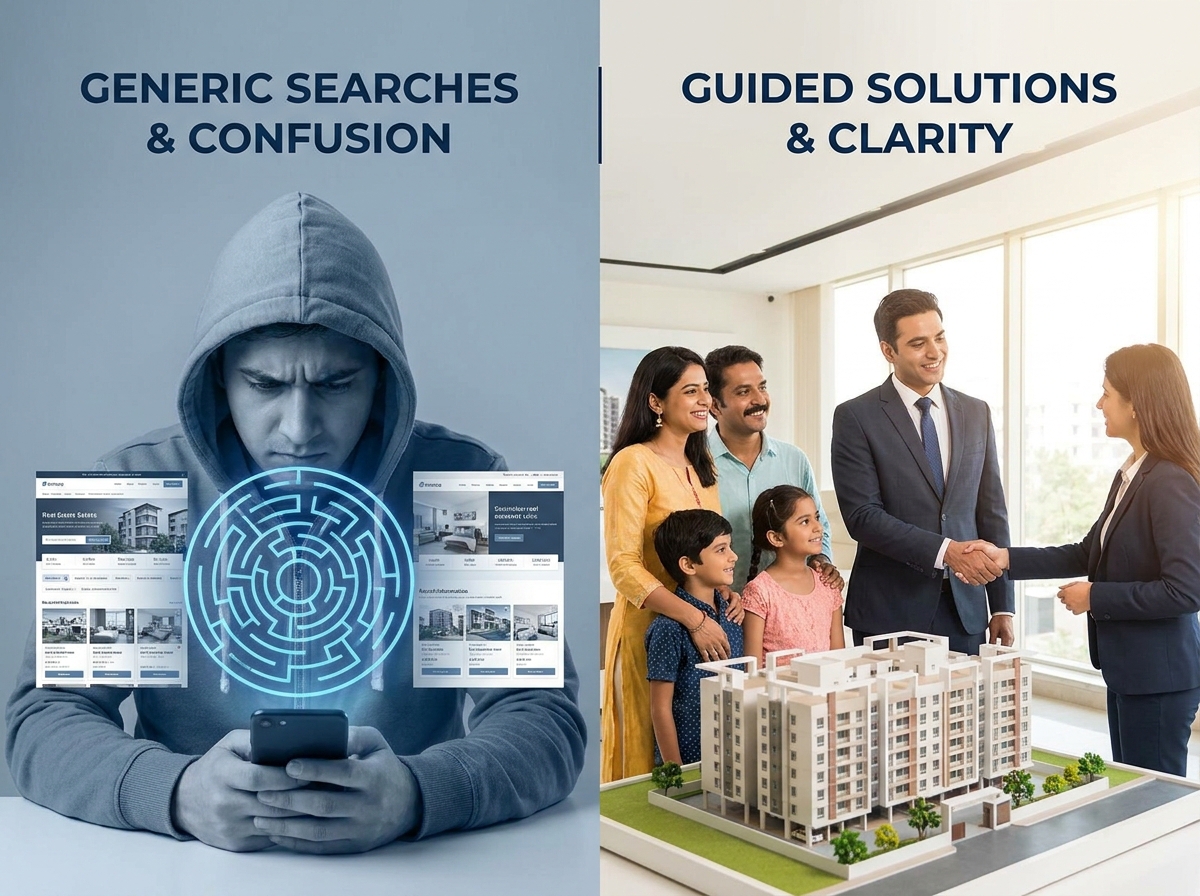
This creates a specific marketing challenge: the funnel is extremely long, deeply non-linear, and spans multiple platforms, family conversations, and financial considerations before a lead ever becomes a buyer.
The typical Indian property buyer's journey looks like this: awareness from a social media ad or YouTube walkthrough → research phase on portals, Google, and peer WhatsApp groups → shortlisting 3–5 projects → site visits → family discussion → financial planning with a bank → final decision.
At every stage except the final one, digital marketing has a role to play. But most developers only invest in the very first stage — top-of-funnel awareness ads — and then hand the buyer off to a portal and hope for the best. The result is high spend, low conversion, and no visibility into where buyers dropped off.
Effective real estate digital marketing means owning the buyer's attention from first awareness through to site visit booking — not just the first click.
Property portals made sense when digital adoption was low and aggregated inventory was the fastest way to reach buyers. In 2026, they remain useful for supplementary visibility — but building your lead generation strategy around them means:
Developers with owned Google Ads campaigns, Meta audiences, and SEO-optimised project pages retain the data, control the narrative, and pay 40–60% lower CPL than pure portal-dependent strategies — with significantly higher lead quality because they control the qualifying questions.
The developers generating the most qualified leads at the lowest CPL aren't using five channels randomly — they're using five channels in an orchestrated system where each one plays a specific role at a specific funnel stage. Here is how the stack works:

| Channel | Primary Role | Primary KPI | Budget Allocation | Activation Timing |
|---|---|---|---|---|
| Google Search | Capture demand | CPL, Conv. Rate | 40–50% of total | Always-on |
| Meta Ads | Create demand | CPL, Site Visits | 25–35% of total | Always-on |
| YouTube | Build trust | View Rate, VTR | 10–15% of total | New launch phase |
| SEO | Organic lead flow | Rankings, Organic leads | Retainer | 12-month play |
| Convert & nurture | Site visit rate | Automation cost | Post lead-capture |
When a buyer types "3 BHK flat in Whitefield under 80 lakhs" into Google, they're telling you exactly who they are, what they want, and that they're actively looking. This is the highest-intent moment in the entire buyer journey — and Google Search Ads own it.
The key is keyword precision. Broad terms like "property in Bangalore" generate volume but destroy CPL. The campaigns that generate quality leads at scale target layered intent: location + property type + price signal + possession timeline. A buyer searching "ready to move 2 BHK Hinjewadi Pune" is weeks, not months, from a site visit.
90% of your potential buyers are not searching for property today. They're living their lives on Instagram and Facebook — and they can be reached based on behavioural and demographic signals that indicate they're likely to buy in the next 6–18 months: household income proxy, recent life events (marriage, new job, relocation), age and family stage, and precise geographic targeting down to a 3km radius from your project site.
Meta Ads create demand before the buyer enters active search mode. Done well, they mean your project is already familiar — even preferred — by the time the buyer runs their first Google search. This is why Meta and Google together produce dramatically better CPL than either channel alone.
Real estate SEO in India is a 12-month investment that produces the lowest CPL of any channel once it's established — often ₹0 per lead for organic traffic. The keyword structure follows a predictable pattern buyers actually search:
Each of these keyword clusters warrants a dedicated landing page or blog post, optimised for that specific search intent. A developer with 15–20 such pages ranking on Page 1 generates consistent organic enquiries with zero ongoing ad spend. For the SEO strategy behind this, see our SEO Services page.
WhatsApp is where Indian real estate deals are made. 78% of property buyers in India use WhatsApp as their primary communication channel with developers during the consideration phase. Treating it as a casual follow-up tool is one of the most expensive mistakes in real estate marketing.
A structured WhatsApp funnel looks like this: immediate automated acknowledgment within 90 seconds of lead capture → project brochure and virtual tour link delivered automatically → follow-up sequence at 24 hours, 72 hours, and 7 days → human handoff to sales team triggered by engagement signals (link click, reply, brochure download).
This sequence converts cold leads into site visit bookings at 2–3x the rate of phone-call-only follow-up — and it works at scale without adding sales headcount.
India is the world's second-largest YouTube market by usage time. For real estate, YouTube serves a specific and high-value function: it lets buyers experience a project before they're willing to make a phone call or book a site visit. A 3–5 minute walkthrough video that shows the actual site, the construction progress, the location context, and a unit tour does more conversion work than any static ad.
YouTube pre-roll ads served to custom audiences (website visitors, Meta retargeting audiences, email lists) consistently produce the highest site-visit booking rate of any channel when used as a mid-funnel touchpoint.

Real estate Google Ads campaigns fail when they target broad, expensive keywords that attract researchers, students, and renters alongside actual buyers. The correct keyword architecture isolates commercial intent by combining three layers:
Combined keywords like "ready to move 3 BHK flat Baner Pune price" may have low monthly search volume — but they convert at 4–6x the rate of head terms, and their CPL is a fraction of broad targeting.
The fastest way to reduce real estate CPL is not to change the ad — it's to fix the landing page. Real estate buyers arriving from a paid search ad need five things within the first three seconds:
Page load speed is critical. For every additional second of load time above 2 seconds, real estate landing page conversion rates drop approximately 12%. Most developer landing pages load in 4–6 seconds on mobile. Cutting this to under 2 seconds alone typically reduces CPL by 20–35%.
CPL benchmarks vary significantly by city, project type, and ticket size. The table below reflects 2026 benchmarks for residential projects across major Indian markets, based on optimised campaign structures — not the average across all developers:
| City / Market | Avg CPL | Good CPL | Best-in-class CPL | Key Context |
|---|---|---|---|---|
| Mumbai / MMR | ₹1,400–₹2,200 | ₹800–₹1,100 | ₹400–₹650 | Highest CPMs; premium project ads most competitive |
| NCR (Delhi/Gurugram) | ₹1,200–₹2,000 | ₹700–₹1,000 | ₹380–₹600 | Strong NRI demand; hyper-local radius targeting essential |
| Bengaluru | ₹900–₹1,600 | ₹550–₹850 | ₹300–₹520 | Tech buyer persona; LinkedIn overlay improves quality |
| Hyderabad | ₹700–₹1,200 | ₹420–₹700 | ₹240–₹420 | Lower CPMs; fastest-growing market in 2025–26 |
| Pune | ₹750–₹1,300 | ₹450–₹750 | ₹260–₹450 | Strong mid-segment demand; WhatsApp funnel highest ROI |
| Tier 2 Cities | ₹400–₹800 | ₹220–₹480 | ₹120–₹280 | Lowest competition; highest ROAS for right developer |
These figures assume properly structured campaigns with intent-based keywords, qualifying landing pages, and correct conversion event tracking. Developers using generic campaigns, broad keywords, or portal-redirect landing pages will typically see CPL 2–3x higher than the "average" column.
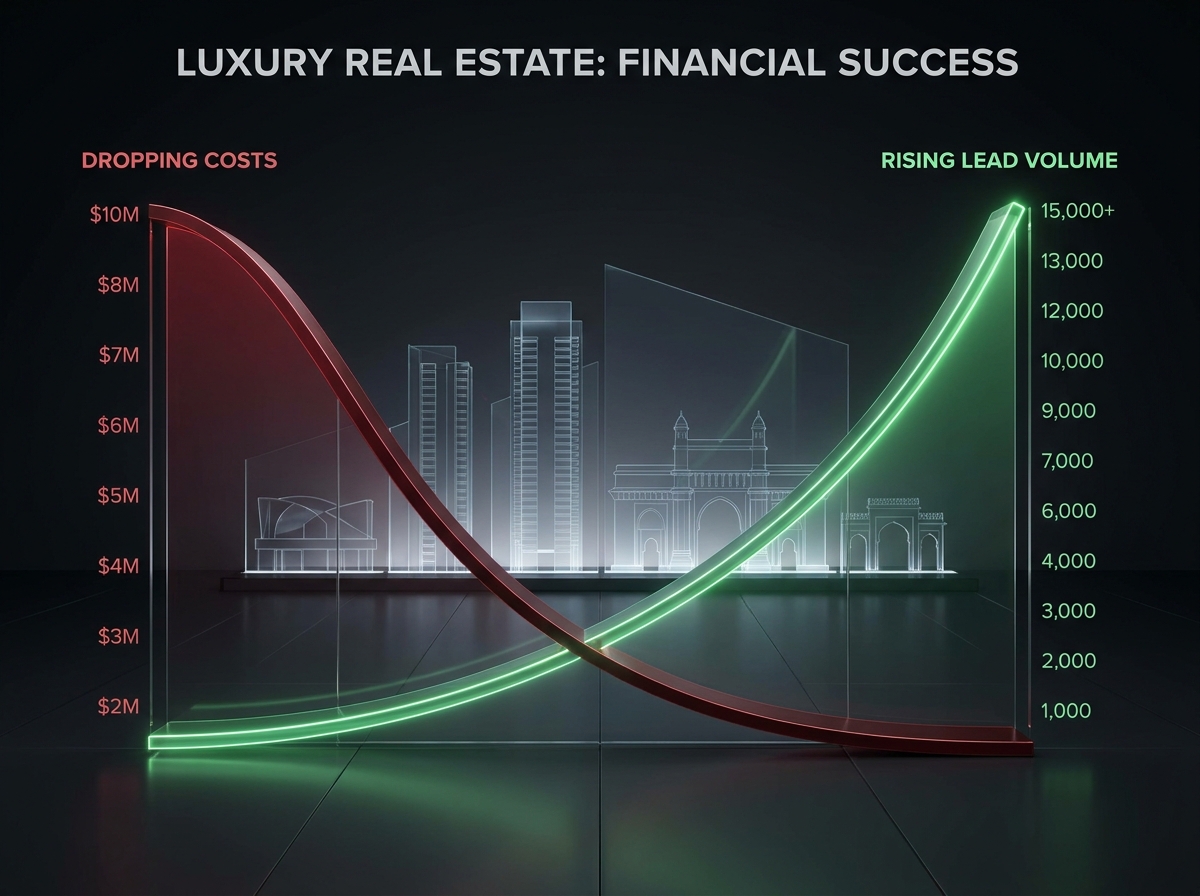
The following data is from a real Cognitive Marketing client engagement: a residential developer in Pune running Google Ads for 6 months with a ₹1,20,000/month ad budget and an average CPL of ₹2,100. Lead volume was 57 leads/month. Of those, the sales team considered roughly 14 qualified.
We made three structural changes — in sequence, over 60 days — and tracked the CPL impact of each independently:
| Change Made | CPL Before | CPL After | Reduction | Why It Worked |
|---|---|---|---|---|
| Audience rebuild (income + radius) | ₹2,100 CPL | ₹1,340 CPL | ↓ 36% | Eliminated low-income traffic outside project radius |
| Correct conversion event | ₹1,340 CPL | ₹890 CPL | ↓ 34% | Switched from 'page view' to 'WhatsApp click' as primary goal |
| Landing page rebuild + speed | ₹890 CPL | ₹610 CPL | ↓ 32% | Load time 5.1s → 1.8s; EMI calculator added; new CTA |
| Combined impact | ₹2,100 CPL | ₹610 CPL | ↓ 71% | Same ad spend; 3.4x more qualified leads/month |
The existing campaign was targeting all adults aged 28–55 in Pune city. This generated high volume — including large numbers of users well outside the project's catchment area and income bracket.
We rebuilt the audience with three constraints: geographic radius of 12km from the project site (buyers of this project type very rarely relocate more than 12km), household income proxy overlay using Meta's equivalent signals in Google Display and YouTube, and exclusion of search terms indicating rental intent ("for rent", "PG", "lease").
CPL dropped from ₹2,100 to ₹1,340 in the first 21 days — without changing the ads, landing page, or budget.
The campaign's primary conversion event was "page view" — meaning the algorithm was optimising to send traffic to anyone likely to view the landing page, not likely to enquire. This is one of the most common and costly setup errors in real estate Google Ads.
We switched the primary conversion event to "WhatsApp button click" — the actual intent signal on this landing page. The algorithm immediately began finding audiences with demonstrated property enquiry behaviour.
CPL dropped from ₹1,340 to ₹890 within 18 days of the conversion event change.
The existing landing page loaded in 5.1 seconds on mobile (tested via PageSpeed Insights). It led with a carousel of renders, had no price information visible above the fold, and the only CTA was a 7-field contact form.
We rebuilt the page with: project name and starting price above the fold, an EMI calculator as the primary interactive element, a WhatsApp CTA button as the primary conversion goal, and load time reduced to 1.8 seconds through image compression and script deferral.
CPL dropped from ₹890 to ₹610 within 30 days of the page going live. Total 90-day result: CPL reduced by 71%, qualified lead volume increased from 14/month to 61/month on the same ad budget.
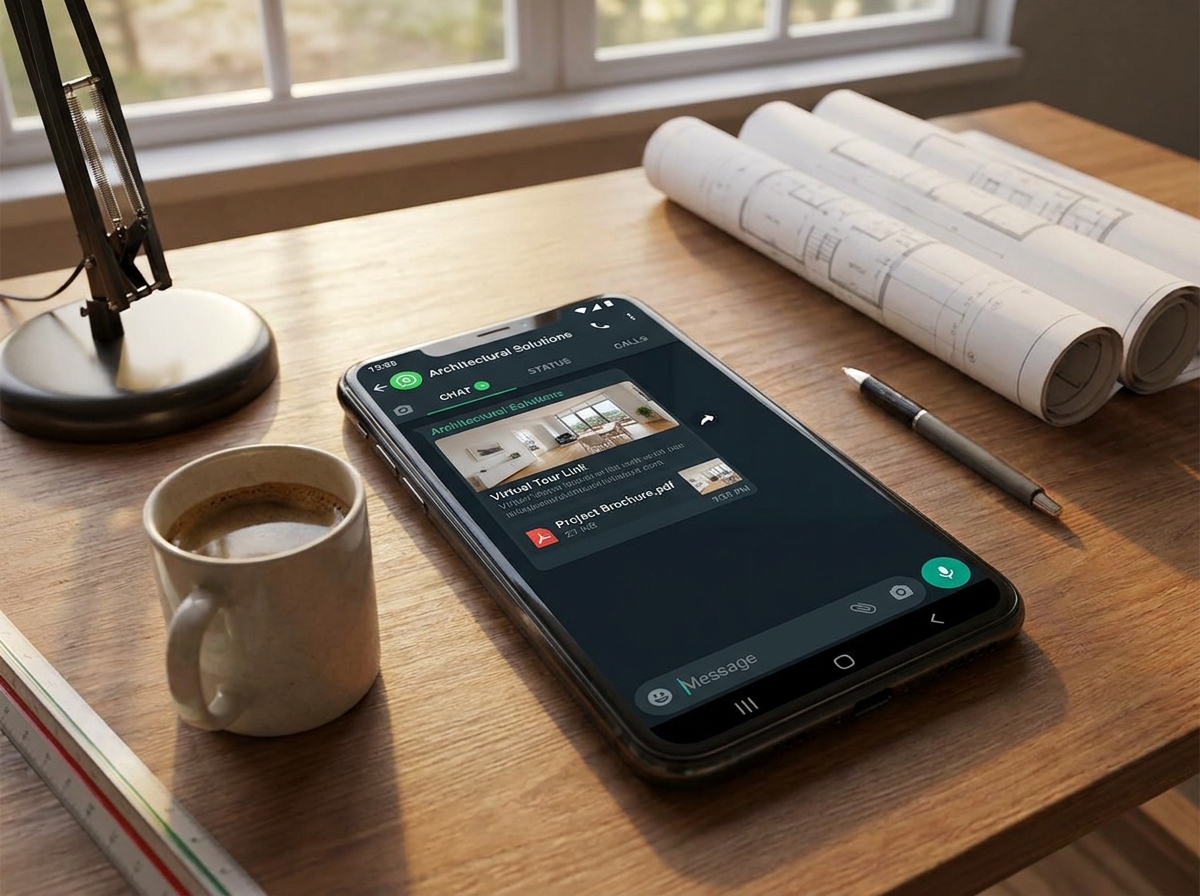
The second most common problem in real estate lead generation — after high CPL — is lead wastage. Most developers are generating more leads than their sales team can follow up with effectively. Leads that don't receive a response within 5 minutes of enquiry have a 10x lower conversion rate than those contacted immediately. At 200–500 leads/month, that 5-minute window is impossible to hit manually for every lead.
Marketing automation solves this without scaling headcount. The framework:
Day 1 (24 hours after enquiry): Follow-up WhatsApp message with a short testimonial video from a resident or construction progress update. CTA: "Would you like to book a 30-minute site visit this weekend?"
Day 3: EMI calculation personalised to the unit type the lead enquired about. "Based on your interest in a 2 BHK at [Project Name], your EMI would be approximately ₹28,000/month at current SBI home loan rates." This message consistently generates the highest reply rate in the sequence.
Day 7: Construction update or possession milestone message. Sends urgency signal without manufactured pressure.
Day 14 and Day 30: Re-engagement message with new content — floor plan comparison, location benefit, or limited inventory signal for hot units.

Not every lead in an automated sequence needs a human. The automation's job is to identify which leads have demonstrated high intent — and pass only those to the sales team with full context.
Handoff triggers: WhatsApp reply received → immediate sales notification with lead details and conversation history. Brochure link clicked twice or more → sales call scheduled automatically via Calendly integration. Site visit booking via automated CTA → calendar invite sent to buyer and sales team simultaneously.
This framework allows a 3-person sales team to effectively manage 400–500 monthly leads without missing high-intent buyers — and without burning the team on leads that need more nurturing time.
We build end-to-end real estate marketing automation stacks — from WhatsApp API integration to CRM handoff and lead scoring. See our Performance Marketing for Real Estate page.
CPL varies by city and campaign quality. In major metros, the market average ranges from ₹700–₹2,200 per lead. Optimised campaigns with intent-based keywords, qualifying landing pages, and correct conversion tracking consistently achieve ₹300–₹650 CPL in most cities. Tier 2 cities like Nashik, Coimbatore, and Lucknow often deliver ₹150–₹350 CPL with less competition.
Both, in combination. Google Search captures buyers who are actively searching — high intent, smaller audience. Meta reaches buyers who are likely to be in-market based on demographic and behavioural signals — larger audience, lower intent. Google converts faster; Meta builds the pipeline. Developers running only Google Ads consistently see diminishing returns as their Search audience saturates. Adding Meta typically reduces blended CPL by 25–40% over 90 days.
For a developer with no existing digital infrastructure, realistic timelines are: 30–45 days to launch Google Ads and Meta campaigns and generate first leads; 60–90 days to optimise CPL to benchmark levels; 6–12 months for SEO pages to rank and produce consistent organic leads; 12–18 months for the full multi-channel stack to operate at 300+ qualified leads/month. Developers with existing campaigns can often hit the 300-lead threshold in 60–90 days with structural improvements alone — without increasing budget.
Facebook and Instagram for awareness (NRI audiences in UAE, UK, USA, Singapore, and Canada can be targeted by current location combined with Indian origin signals). Google Search for active-intent NRI buyers — search terms like "property investment India NRI", "buy flat India from abroad", and project-specific brand terms. WhatsApp for nurture — NRI buyers have even longer consideration periods and WhatsApp is their primary communication channel with family in India. Dedicated NRI-specific landing pages with currency conversion, NRI loan eligibility details, and virtual tour options dramatically improve conversion rates for this segment.
For a developer launching a single residential project with 100–300 units at a ₹50–₹80 lakh ticket size, a realistic monthly digital marketing budget is ₹80,000–₹1,50,000 in ad spend across Google and Meta, plus ₹30,000–₹50,000 for agency management and automation setup. This budget, managed with intent-based keyword structure and proper attribution, should generate 100–200 qualified leads/month in most metro markets within 60–90 days of optimisation. For Tier 2 markets or projects with broader appeal, the same budget can generate 250–400 leads/month.

Your competitors are generating more leads from the same market.
We'll audit your current campaigns, landing pages, and attribution setup — and show you exactly where your CPL is higher than it should be, what's causing it, and what a restructured campaign would look like.
✦ ₹47Cr+ in client revenue generated ✦ 74 qualified leads/month → one restructured campaign ✦ 71% CPL reduction, no budget increase
Book your free real estate audit →Performance Marketing for Real Estate | Performance Marketing Services | Google Ads Management India | SEO Services India
Prashant — Founder & Head of Performance, Cognitive Marketing
Prashant leads performance marketing at Cognitive Marketing, a B2B growth agency based in Varanasi, India. He has built digital marketing systems for real estate developers across NCR, Pune, Hyderabad, and Tier 2 markets — generating over ₹47 crore in directly attributed client revenue across 23+ industries. His real estate campaigns have consistently delivered CPL reductions of 50–71% through attribution restructuring, audience precision, and landing page optimisation.
Connect: linkedin.com/in/prashant-chaubey | cognitivemarketing.in
